
AI++ 101 : Build a C++ Coding Agent from Scratch is a one-day onsite training course with programming examples, taught by Jody Hagins. It is offered at the Gaylord Rockies from 09:00 to 17:00 Aurora time (MDT) on Sunday, September 13th, 2026 (immediately prior to the conference). Lunch is included.
◈ Register Here ◈ See Other Offerings ◈
Course Description
Remember writing a compiler in university? Not a real compiler, but something that handled a subset of a language and generated naive code. You’d never ship it. But decades later, you still understand how compilers work because you built one.
That’s what we’re doing here. In one intensive day, you will build a working AI coding agent in C++.
Not Claude Code. Not Cursor. A simple thing you fully understand, that talks to an LLM, defines tools, executes them, and runs the same agentic loop that powers every AI coding assistant on the market.
This workshop emerged from my own AI/C++ journey. I watched AI stumble through C++ like a freshman who skipped the first three weeks of class, until I discovered the problem wasn’t the models, it was me. The breakthrough came from understanding what’s actually happening under the hood.
In this workshop, you will write a fully functioning agent harness in C++. Like those university compilers, it will not be production ready, but will serve as a laboratory for learning how generative AI large language models can be used as C++ programmers.
By end of day, your agent will read code, write code, compile it, fix its own errors, and even modify its own source code to add new capabilities.
You won’t ship this agent. But you’ll understand what Claude Code and Cursor are actually doing. When they break, you’ll know why. When new tools emerge, you’ll evaluate them with comprehension instead of hype.
What You’ll Build:
A C++ program that talks to an LLM API
System prompts that shape model behavior
Tool definitions (read_file, write_file, run_command)
A working agentic loop
An agent capable of modifying its own source
What You’ll Understand:
Why the same model acts completely different with different prompts
What “tool calling” actually means (spoiler: you do all the work)
How context windows work and why you send the whole conversation every time
What “turns” are and how the conversation builds up
Why agents sometimes go off the rails and how to prevent it
Format: Lab-heavy. Students build; instructor guides. Starter code provided for API plumbing.
Prerequisites
In order to benefit from this class, you will need:
Professional C++ experience—you should be comfortable writing and debugging C++ code
Basic familiarity with REST APIs and JSON (we won’t teach HTTP or JSON parsing)
An OpenRouter account with API key (free tier is sufficient for the workshop)
A laptop with a working C++ build environment (C++17 or later, CMake)
Willingness to experiment, break things, and discuss discoveries with fellow participants
Starter code is provided that handles API communication and JSON parsing. You’re here to learn how AI agents work, not to debug libcurl.
Course Topics
The “Dumb Model” Problem
How models generate responses
What happens when you ask an LLM to read a file it can’t access
Why models hallucinate confidently, and what this tells us about how they work
The fundamental statelessness of LLM interactions
System Prompts: Programming the Model
How the same model behaves completely differently with different prompts (and even with the same prompts).
The three message roles: system, user, assistant
Crafting effective system prompts for coding tasks
Live experiments: helpful assistant vs. grumpy reviewer vs. pedantic standards lawyer
Tool Definitions and Tool Calling
JSON schema for describing tools
The critical insight: tool definitions say how, system prompts say when and why
Examining tool call responses: finish_reason, tool_calls array, arguments
Why adding a tool definition alone doesn’t make the model use it
Executing Tools and Returning Results
The tool result message format
Sending results back to the model
Watching the model continue with new information
Implementing read_file, write_file, and run_command
The Agentic Loop
The fundamental pattern: Think → Request Tool → Execute → Observe → Repeat
Detecting when to stop: finish_reason, max iterations, user interrupt
Error handling: what happens when tools fail
Building the complete loop in C++
Understanding Turns and Context
Why you send the entire conversation every time
How the messages array builds up over multiple tool calls
Context window limits and their implications
What “turns” mean in practice
The Self-Improvement Challenge
Pointing your agent at its own source code
Asking it to add a new tool or improve error handling
Watching code that writes code
Discussion: what worked, what didn’t, what surprised you
Course Instructor
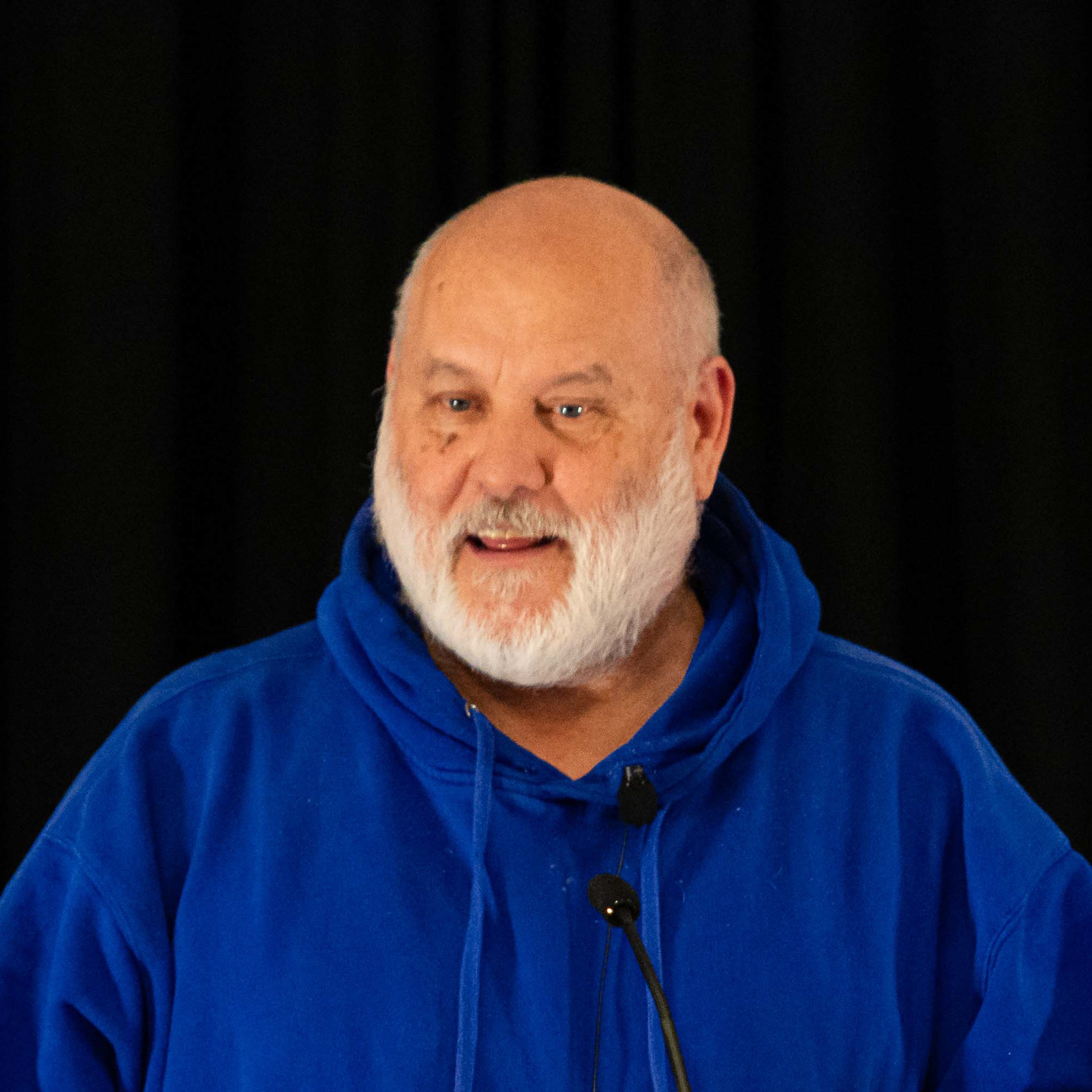
Jody Hagins a Director at LSEG, working on high-frequency trading infrastructure, including feed handlers, normalization processes, and low-latency systems. His background spans four decades, from graduate work in AI during the 1980s (Lisp, Smalltalk, model-based reasoning) through Unix kernel development in C, to modern C++ for financial systems.
After approaching generative AI with healthy skepticism born of living through two AI winters, Jody discovered that the tools had finally caught up, but only for those who understand how to use them effectively. His 2026 talk, “Meet Claude, Your New HFT Infrastructure Engineer,” demonstrated building a complete OPRA feed handler without writing code by hand.
Jody has spoken at numerous C++ conferences on a wide range of C++ topics.